

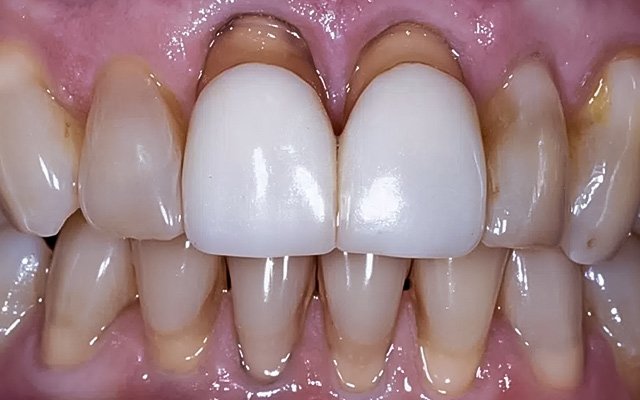
Receding gums expose more of the tooth and sometimes its root, increasing the risk of sensitivity, decay, and loose teeth if left untreated.
Early diagnosis and timely dental treatment can slow or stop further damage by addressing the underlying cause rather than simply relieving symptoms.
Learning why gums recede and recognising its early signs can help you stop it from progressing. Today, we discuss exactly that below.
Have You Noticed Your Teeth Looking “Longer” Than They Used To?
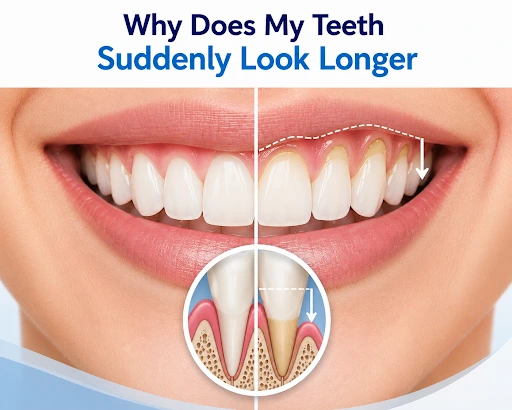
If your teeth appear longer than before, they are not actually growing. Instead, receding gums may be exposing more of the tooth root.
This is commonly caused by gum disease, aggressive brushing, or teeth grinding. The exposed roots can also lead to increased tooth sensitivity.
| What You Notice | What It Could Mean |
| Teeth appear longer | Gum tissue has receded |
| Uneven gum line | Early tissue loss |
| Small root exposure | Higher sensitivity risk |
| Food trapping | Spaces forming near gums |
| Smile looks different | Progressive gum changes |
What exactly is Gum Recession?
Recession occurs when the gum tissue around the teeth gradually pulls back or wears away, exposing the tooth roots.
It is a common condition, particularly with age. Approximately 88% of adults over 65 have gum recession affecting one or more teeth. (Source)
As the gums recede, spaces develop where bacteria can accumulate, increasing the risk of gum disease, tooth decay, and bone loss. As the roots are not protected by enamel, exposed roots can also cause tooth sensitivity and make the teeth appear longer.
Dentists also assess different gum recession stages to determine the severity of tissue loss and plan the most suitable care.
How Is It Different from Normal Gum Sensitivity?
Normal gum sensitivity can be temporary. It usually develops after vigorous brushing, dental cleaning, or eating very hot or cold foods and settles once the irritation resolves.
Gum recession is different because the discomfort results from permanent exposure of the tooth root.
Normal Sensitivity Vs Recession (Quick View)
| Normal Tooth Sensitivity | Gum Recession |
| Often temporary | Usually develops gradually |
| Triggered by whitening, acidic foods or enamel wear | Caused by loss of gum tissue |
| Gum line remains unchanged | Gum line moves downward |
| Tooth root stays covered | Tooth root becomes exposed |
| Symptoms may settle once the trigger is removed | Symptoms may continue without treatment |
| Usually affects the tooth surface | Involves both the gums and supporting tissues |
| Requires treatment only if persistent | Professional assessment needed to prevent progression |
What Actually Causes Gums to Recede?
It is primarily caused by periodontal (gum) disease, gum recession from brushing too hard, genetics, teeth grinding (bruxism), tobacco use, misaligned teeth, poor oral hygiene, and trauma from oral piercings.
As the gums pull away from the teeth, the exposed roots become more sensitive and vulnerable to decay, making early diagnosis and receding gums treatment important to prevent further damage.
Can Brushing Too Hard Really Cause Gum Recession?
Yes. Repeated trauma from brushing can gradually wear away gum tissue.
This happens especially when you:
- Use a hard-bristled toothbrush.
- Apply excessive pressure.
- Scrub horizontally along the gumline.
Dentists recommend a soft-bristled toothbrush and gentle circular brushing.
Is Gum Disease the Most Common Cause?
Yes. Plaque bacteria trigger inflammation that gradually damages the tissues supporting the teeth. As the disease progresses, it can also lead to:
- Deep periodontal pockets
- Bone loss
- Loose teeth
- Tooth loss (if left untreated)
Early treatment, including dental scaling, helps remove plaque and tartar before permanent damage becomes more extensive.
Is Gum Disease the Most Common Cause?
Yes. Plaque bacteria trigger inflammation that gradually damages the tissues supporting the teeth. As the disease progresses, it can also lead to:
- Deep periodontal pockets
- Bone loss
- Loose teeth
- Tooth loss (if left untreated)
Early treatment, including dental scaling, helps remove plaque and tartar before permanent damage becomes more extensive.
Is Gum Disease the Most Common Cause?
Yes. Plaque bacteria trigger inflammation that gradually damages the tissues supporting the teeth. As the disease progresses, it can also lead to:
- Deep periodontal pockets
- Bone loss
- Loose teeth
- Tooth loss (if left untreated)
Early treatment, including dental scaling, helps remove plaque and tartar before permanent damage becomes more extensive.
Is Gum Disease the Most Common Cause?
Yes. Plaque bacteria trigger inflammation that gradually damages the tissues supporting the teeth. As the disease progresses, it can also lead to:
- Deep periodontal pockets
- Bone loss
- Loose teeth
- Tooth loss (if left untreated)
Early treatment, including dental scaling, helps remove plaque and tartar before permanent damage becomes more extensive.
Can Genetics Make Some People More Prone to It?
Yes. Genetics can increase your risk of receding gums by making your gum tissue naturally thinner or more vulnerable to damage. Even with good brushing and flossing habits, inherited traits can make some people more susceptible to gum recession than others.
Key genetic factors that increase your risk include -
- Thin gum tissue: Some people naturally inherit thinner, more delicate gums that are more prone to recession.
- Immune response: Certain genetic traits can trigger a stronger inflammatory response to oral bacteria, increasing the risk of gum and bone loss.
- Weaker connective tissue: Inherited differences in collagen production may make the gums less resilient and more susceptible to damage.
Does Teeth Grinding or Misalignment Play a Role?
Yes. Excessive biting forces from teeth grinding or an uneven bite increase stress on the supporting tissues.
Risk factors include:
- Night-time teeth grinding
- Bite misalignment
- Crowded teeth
- Uneven chewing forces
Correcting these factors helps reduce ongoing damage and supports long-term gum health.
What Are the Early Signs You Might Be Missing?
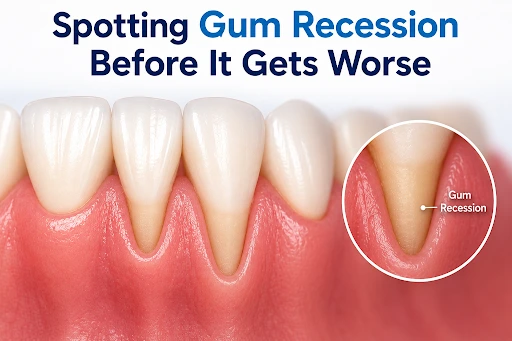
Early signs of gum recession that you may be missing include
- Teeth looking longer
- Visible root surfaces
- Sensitivity to hot, cold, sweet, or acidic foods
- Bleeding while brushing
- Food trapping between teeth
- Small notches near the gumline
- Bad breath if gum disease is present
Is Tooth Sensitivity an Early Warning Sign?
Yes. Tooth sensitivity is often one of the earliest warning signs of gum recession.
As the gums pull back, the exposed tooth roots lose their protective covering, making them sensitive to hot, cold, sweet foods, and even cold air.
However, sensitivity can also be caused by tooth decay, enamel wear, cracked teeth, or leaking fillings. A dental examination can identify the underlying cause.
Do Longer-Looking Teeth Always Mean Recession?
Not always. While longer-looking teeth are most commonly caused by gum recession, they can also result from natural ageing, enamel wear, or certain cosmetic dental procedures.
A dental examination is the best way to determine whether recession or another condition is responsible.
Can Receded Gums Grow Back on Their Own?
No. Receding gums cannot grow back naturally because lost gum tissue does not regenerate on its own.
While the recession cannot be reversed without treatment, early care can prevent further damage, and procedures such as gum graft surgery can repair exposed roots and restore the gum line.
How Do Dentists Actually Stop Gum Recession From Progressing?
Gum recession treatment focuses on addressing the underlying cause to stop further progression.
The right approach depends on the severity of the recession, your gum health, and factors such as gum disease, brushing habits, or teeth grinding.
What Non-Surgical Treatments Are Available First?
- Professional scaling to remove plaque and tartar from below the gum line.
- Treatment of gum disease to control infection and reduce inflammation.
- Improving your brushing technique if gum recession from brushing too hard is the cause.
- Better plaque control through personalised oral hygiene advice.
- Bite adjustment, if excessive bite forces are contributing to gum damage.
- Night guards to protect your teeth and gums from the effects of teeth grinding (bruxism).
These treatments control disease progression but do not replace lost gum tissue. Flap surgery may be recommended if non-surgical treatment is no longer sufficient.
When Is a Gum Graft Actually Necessary?
Soft tissue grafting may be recommended when:
- Root exposure is extensive
- Sensitivity persists
- Recession continues to worsen
- Root decay risk increases
- Additional root protection is needed
The procedure covers exposed roots and increases gum thickness.
What Can You Do at Home to Slow Down or Prevent Further Recession?
You cannot regrow lost gum tissue at home, but you can help slow down or prevent further gum recession. Use a soft-bristled toothbrush with gentle circular strokes, floss daily, maintain good oral hygiene, eat a Vitamin C-rich diet, and avoid tobacco.
These habits protect your gums, but the existing condition requires professional assessment.
What’s the Right Brushing Technique to Protect Your Gums?
- Hold the brush at a 45° angle.
- Use light pressure.
- Brush in small circular motions.
- Brush for two minutes twice daily.
- Replace worn toothbrushes every 3-4 months.
When Should You See a Dentist About Receding Gums?
The urgency depends on your symptoms. Use this guide to know when you should seek dental care.
| Stage | What You May Notice | What You Should Do |
| Mild | Slightly longer teeth, mild sensitivity | Book a routine dental check-up. |
| Progressing | Root exposure, persistent sensitivity, bleeding gums | Arrange treatment within the next few weeks. |
| Urgent / Advanced | Loose teeth, pus, severe pain, heavy bleeding | See a dentist immediately. |
Why Professional Dental Treatment Is Essential for Gum Recession?
Dental treatment is essential as it helps:
- Diagnose the underlying cause
- Remove bacteria and tartar
- Prevent further gum and bone loss
- Protect exposed tooth roots
- Restore the gum line with soft tissue grafting, flap surgery, or the Pinhole Surgical technique.
If you are looking for dental treatment, early care helps preserve healthy gums and natural teeth.
What Should You Do Next?
If you think you may have gum recession, here’s what to do next
- Book a dental evaluation to identify the underlying cause
- Treat gum disease early to prevent further tissue and bone loss
- Follow your dentist's oral hygiene advice to reduce future damage
- Discuss the most suitable treatment options, including non-surgical care or soft tissue grafting if required
- Attend regular dental check-ups to monitor your gum health and prevent recurrence
For personalised dental treatment, call 062921 09993 today to book a session at Smile and Profile in Kolkata.
People Also Ask
Can Receding Gums Grow Back Naturally?
No. Lost gum tissue cannot grow back naturally. Early treatment can stop progression, reduce sensitivity, and protect exposed tooth roots.
What Is the Main Cause of Gum Recession?
Gum disease is the most common cause. Aggressive brushing, teeth grinding, bite problems, and naturally thin gum tissue can also contribute.
Does Brushing Too Hard Cause Gums to Recede?
Yes. Brushing too hard or using incorrect technique can gradually wear away gum tissue, particularly along the gumline over time.
Is Gum Recession Always Linked to Gum Disease?
No. Gum recession can also result from aggressive brushing, teeth grinding, genetics, bite problems, or naturally thin gum tissue.
How Do I Know if My Gum Recession Is Getting Worse?
Look for longer-looking teeth, exposed roots, increasing sensitivity, bleeding gums, food trapping, or visible changes in your gumline.
What Is a Gum Graft, and Is It Painful?
A gum graft covers exposed roots using healthy tissue. Local anaesthesia controls discomfort, and most people recover with only mild soreness.
Can Receding Gums Be Stopped Without Surgery?
Yes. Early treatment, professional cleaning, good oral hygiene, and treating the underlying cause can prevent further gum recession.
Why Are My Teeth Suddenly More Sensitive to Cold?
Cold sensitivity often occurs when exposed tooth roots, enamel wear, tooth decay, or cracks allow temperature changes to reach the tooth.
Is Gum Recession More Common With Age?
Yes. The risk increases with age because gum tissues experience cumulative wear and prolonged exposure to contributing risk factors.
When Should I See a Dentist About Receding Gums?
See a dentist if you notice exposed roots, persistent sensitivity, bleeding gums, loose teeth, or a progressively receding gumline.