

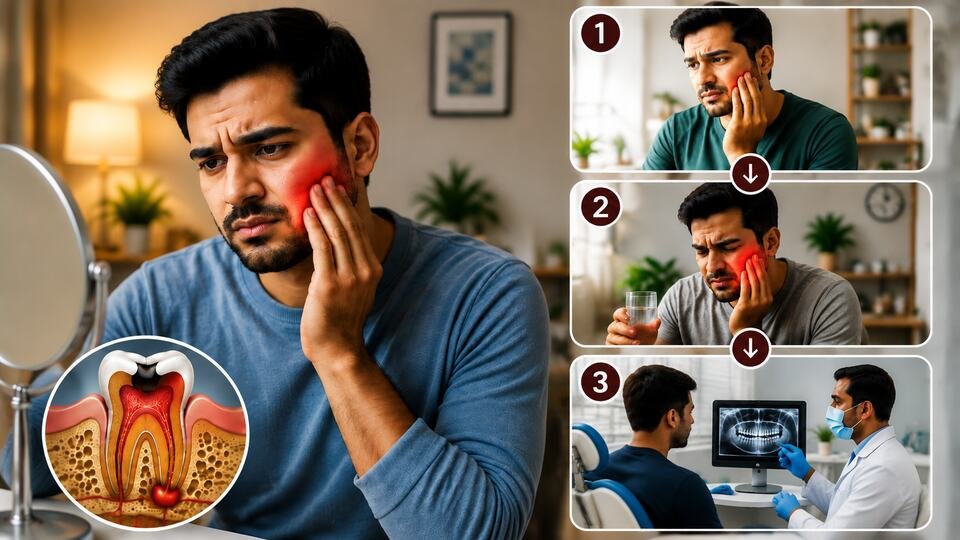
When an infected tooth starts hurting, it is tempting to wait for the pain to settle before seeing a dentist. But delaying root canal treatment can let an untreated tooth infection spread beyond the pulp and affect the surrounding tissues. The pain may even disappear temporarily if the pulp dies, creating a false sense that the problem has improved. In reality, the infection may still be active. Knowing the warning signs and seeking timely dental care can help protect the tooth and reduce the risk of complications.
How Does a Tooth Infection Actually Spread If Left Untreated?
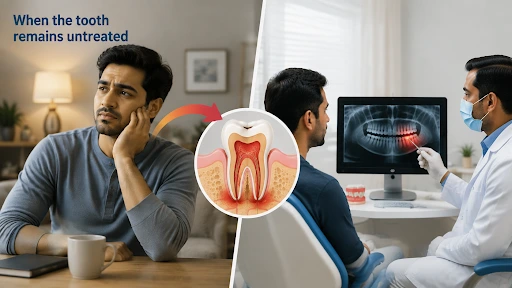
A tooth infection often begins when deep decay, a crack, or trauma allows bacteria to reach the soft tissue inside the tooth, known as the pulp. Once the infected tooth pulp becomes inflamed or dies, bacteria can move through the root canals towards the tissues surrounding the root.
Without treatment, this can lead to a dental abscess, a collection of pus caused by infection. The infection may remain localised for some time, but it does not simply disappear because the pain reduces.
Common dental abscess complications can include:
- Persistent or recurring pain
- Gum swelling or a gum boil
- Infection around the root
- Damage to surrounding bone
- Spread of infection into nearby tissues
Root canal treatment removes the infected pulp, cleans and disinfects the canals, and seals the tooth to prevent reinfection.
What Are the Early Warning Signs You Shouldn’t Ignore?
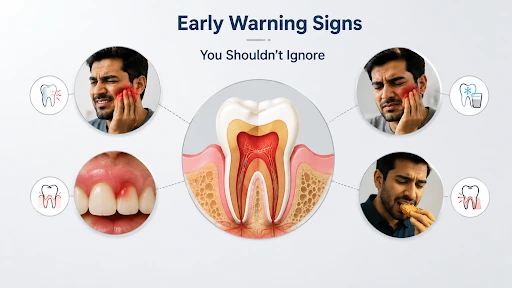
An infected tooth doesn't always cause the same symptoms. Some people experience severe pain, while others notice only swelling, sensitivity or a bad taste.
Persistent or Worsening Pain
Pain that continues, returns repeatedly, or worsens while chewing should be assessed. Lingering sensitivity to hot or cold and pain on biting can also indicate inflammation or infection inside the tooth.
Importantly, pain stopping does not always mean the tooth has healed. If the pulp dies, the nerve may stop producing pain even though bacteria remain inside the tooth.
Swelling in the Face or Gums
Swelling from a tooth infection may appear around the affected tooth, gum, jaw or face. A small pimple or draining point on the gum can also indicate an abscess. Do not ignore facial swelling, especially if it is increasing.
Fever or a Bad Taste in the Mouth
A persistent bad taste may occur when an abscess drains into the mouth. Fever, swollen glands or feeling generally unwell can indicate that the infection is becoming more significant.
What Happens Inside Your Body When Infection Is Left Untreated for Weeks?
As an infection progresses, bacteria and inflammatory products can move beyond the pulp and into the tissues around the root. This may cause inflammation and harm the bone supporting the tooth.
One recognised consequence is bone loss from dental infection around the root. An untreated root infection can develop into an abscess or cyst and may lead to bone loss around the root, potentially loosening the tooth.
The infection may also cause:
- Recurrent swelling or gum boils
- Increasing tenderness while biting
- Damage to supporting tissues
- Greater difficulty preserving the tooth
The important point is that the timeline is unpredictable. No fixed number of days or weeks means every infected tooth will become dangerous. Severity depends on the tooth, the infection, immune status, and whether the infection is spreading.
Can a Delayed Infection Turn Into a Medical Emergency?
Yes, although serious complications are not inevitable.
A dental infection can spread into the face and neck. Severe or rapidly increasing swelling can become dangerous if it affects the airway or deeper tissues.
Seek urgent medical or dental assessment if you develop:
- Rapidly increasing facial or mouth swelling
- Difficulty breathing or swallowing
- Difficulty opening your mouth
- High fever or significant weakness
- Swelling around the eye or changes in vision
In such situations, emergency root canal treatment may be part of definitive dental care, but the exact treatment depends on the source and extent of infection. Severe spreading infections may also require drainage, antibiotics and hospital-based treatment.
Does Delaying Treatment Mean You’ll Need an Extraction Instead?
Not necessarily, but delaying treatment can reduce the chances of saving a tooth if the infection causes extensive damage or the tooth becomes structurally compromised.
When comparing tooth extraction vs root canal, the dentist first assesses whether the tooth can be predictably restored. If enough healthy tooth structure remains and the supporting tissues are suitable, root canal treatment may preserve the natural tooth.
Extraction may be considered when the tooth:
- Cannot be adequately restored
- Has severe structural damage
- Has an unfavourable fracture
- Has extensive supporting-tissue damage
- Has a poor long-term prognosis
A root canal removes infection from inside the tooth while preserving the remaining natural tooth structure. After treatment, the tooth generally needs a suitable restoration, such as a crown, depending on its condition.
If you are considering root canal treatment in Kolkata, a dentist can assess the tooth clinically and with appropriate imaging before deciding whether it can be saved.
Will Waiting Longer Make the Root Canal Procedure More Complicated?
Delaying root canal treatment doesn't automatically make every procedure more difficult, but a more advanced infection may require additional assessment or management.
For example, a dentist may need to deal with:
- An abscess or significant swelling
- More extensive infection around the root
- Greater loss of tooth structure
- A tooth that has become difficult to restore
- Additional treatment before the final restoration
Dentists commonly treat an abscessed tooth by cleaning and disinfecting the root canals, then sealing and restoring the tooth. Early assessment therefore gives the dentist a better opportunity to determine the most suitable tooth-saving approach.
What Should You Do If You Suspect an Infected Tooth Right Now?
Do not wait for severe pain before arranging a dental assessment. The risks of ignoring tooth pain increase when an underlying infection remains untreated.
If you have persistent pain, swelling, sensitivity, a gum boil or a bad taste:
- Arrange a dental examination promptly.
- Avoid self-starting leftover antibiotics.
- Do not assume reduced pain means the infection is gone.
- Seek urgent care if swelling spreads or breathing or swallowing becomes difficult.
A definitive dental treatment, such as root canal treatment or drainage, is recommended for most localised dental infections rather than relying on antibiotics. Antibiotics may be appropriate when there are signs of systemic involvement or spreading infection.
If you are considering a root canal treatment in Kolkata, connecting with us for a timely evaluation can help determine whether the natural tooth can still be preserved.
Final Thoughts — Don’t Let a Small Problem Become a Big One
An infected tooth rarely benefits from waiting. Early diagnosis can help prevent an infection from progressing, protect surrounding tissues and improve the chance of saving the natural tooth.
If you have persistent tooth pain, swelling, or other signs of infection, we help you with:
- detailed checkup,
- clinical examination to assess the issue,
- and recommend a treatment plan.
Don’t delay, step into any of our clinics today!
What People Also Ask
1. How quickly can a tooth infection spread to other parts of the body?
There is no reliable timeline. Some infections remain localised, while others can spread more quickly. Rapid facial swelling, fever, difficulty swallowing or breathing require urgent assessment.
2. Is it possible for a tooth infection to heal on its own without treatment?
No. A dental abscess does not normally resolve on its own. Symptoms may temporarily improve, particularly if the pulp dies or an abscess drains, but the underlying infection still requires dental treatment.
3. What's the difference between a toothache and a sign of infection that needs urgent care?
A toothache can have several causes. Persistent pain with swelling, fever, a gum boil, bad taste or difficulty opening the mouth is more concerning for infection and warrants prompt dental assessment.
4. Can antibiotics alone cure an infected tooth without a root canal?
Usually, antibiotics do not remove the source of a localised infection inside the tooth. Definitive treatment, such as root canal treatment, drainage, or extraction, may be required. Antibiotics are generally reserved for specific situations, including systemic involvement.
5. How long can you safely wait before an infected tooth becomes an emergency?
There is no safe universal waiting period. The infection may worsen unpredictably, so assess an infected tooth promptly. Breathing or swallowing difficulty, rapidly spreading swelling, or severe systemic symptoms require emergency care.