

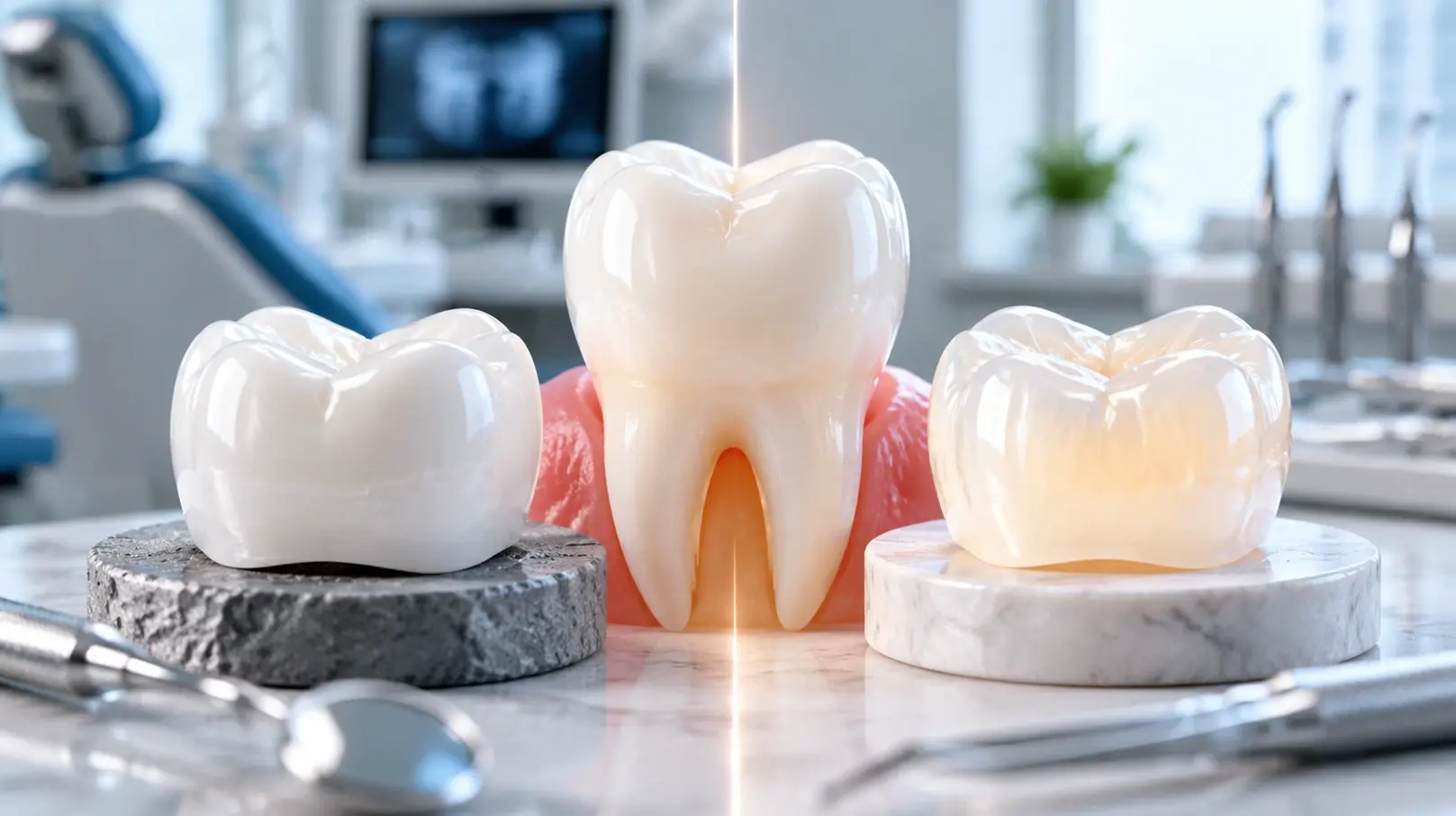
A National Library of Medicine study shows zirconia crowns are structurally vastly stronger, with 1,200 MPa of flexural strength compared to just 100–400 MPa for traditional ceramics. As a result, they have a higher 5-year survival rate (94% vs 89% for lithium disilicate). However, choosing the right dental crown can feel confusing. It depends on factors like tooth location, strength requirements, appearance, and much more. To help clear all doubts, our blog explains:
- How zirconia and ceramic crowns differ in strength and appearance
- Which crown material may suit different dental needs
- Factors that influence durability, cost and long-term results
What Are Dental Crowns and Why Do You Need One?
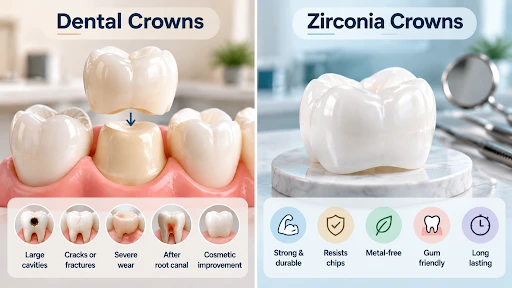
A dental crown is a custom-made covering placed over a damaged or weakened tooth to restore its shape, strength and function. It works like a protective cap that surrounds the visible portion of the tooth.
Dentists may recommend crowns when a tooth has:
- Large cavities or extensive fillings
- Cracks or fractures
- Severe wear
- Weak structure after root canal treatment
- A need for cosmetic improvement
Among different tooth restoration options, crowns are preferred when a simple filling may not provide enough support. They not only improve appearance but also help protect the remaining natural tooth structure.
The choice of crown material matters because every tooth has different demands. For example, back teeth require high chewing strength, while front teeth often require a highly aesthetic result.
What Are Zirconia Crowns?
Zirconia crowns are made from zirconium dioxide, a strong ceramic material known for its durability and fracture resistance. They are completely metal-free, making them a popular choice for patients seeking strong, aesthetic restorations.
Many patients searching for zirconia crowns in Kolkata choose them for their combination of strength and a tooth-like appearance.
Key benefits of zirconia crowns include:
- High resistance to cracks and chips
- Excellent strength for back teeth
- Metal-free composition
- Good compatibility with gum tissues
- Long-lasting performance
Because they don't have a metal base, zirconia crowns can avoid the dark gum line that may sometimes appear with metal-based crowns.
These metal-free crowns are especially suitable for patients who want a strong restoration without compromising smile aesthetics.
What Are Ceramic Crowns?
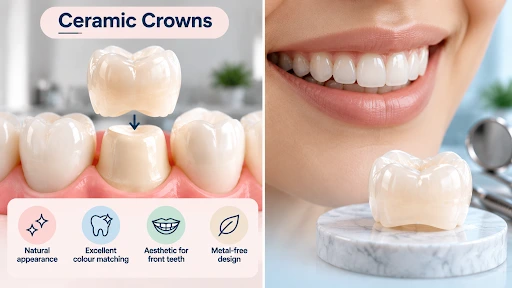
Ceramic crowns are made from dental ceramic materials designed to closely resemble natural tooth enamel. They are widely used when appearance is a major priority, especially for visible front teeth.
Patients considering ceramic crowns in Kolkata often choose them for their excellent translucency and ability to reflect light like natural teeth.
Advantages of ceramic crowns include:
- Highly natural appearance
- Excellent colour matching
- Good aesthetic results for front teeth
- Metal-free design
Modern ceramic materials have improved significantly, offering better strength than older ceramic restorations. However, compared with zirconia, some ceramic types may resist heavy biting forces less well.
For patients seeking natural-looking crowns, ceramic options can provide beautiful cosmetic results when selected for the right situation.
Zirconia vs Ceramic Crowns — Key Differences
When comparing zirconia vs ceramic crowns, no single option is better for every patient. The ideal choice depends on where the crown is needed and what the tooth requires.
| Factor | Zirconia Crowns | Ceramic Crowns |
| Strength | Very high strength and fracture resistance | Good strength with excellent aesthetics |
| Best suited for | Back teeth and areas with heavy chewing pressure | Front teeth where appearance is a priority |
| Appearance | Natural-looking, especially with newer layered designs | Highly aesthetic and translucent |
| Material | Zirconium dioxide | Dental ceramic materials |
| Metal-free | Yes | Yes |
| Cost | Usually higher depending on type and clinic | Varies based on ceramic material |
Strength and Durability
Strength is one of the biggest differences when comparing crown materials.
Zirconia is known for excellent crown durability because it can withstand strong chewing forces. This makes it a preferred choice for molars and patients with heavy biting pressure.
Ceramic crowns can also perform reliably, but some ceramic types may be more vulnerable to chips or fractures under high stress.
When considering crown longevity, factors such as bite pattern, oral hygiene, grinding habits, and regular dental care matter as much as the crown material itself.
Appearance and Aesthetics
Both zirconia and ceramic crowns can create attractive results when properly planned.
Traditional ceramic crowns are often praised for their translucency and ability to mimic natural enamel, making them suitable for highly visible teeth.
Modern zirconia crowns have also improved significantly. Newer designs offer better shade matching and a more natural appearance while maintaining their strength.
For patients wanting natural-looking crowns, the final result depends not only on the material but also on proper colour selection, tooth preparation and dentist expertise.
Cost Comparison
The dental crown cost depends on various factors, including:
- Type of crown material
- Number of crowns required
- Laboratory quality
- Dentist expertise
- Complexity of the procedure
Zirconia crowns may cost more because of advanced manufacturing technology and material strength. Ceramic crowns may vary widely in price depending on the type of ceramic used.
Rather than choosing based only on cost, patients should consider long-term value, durability, and suitability for their specific dental condition.
Procedure and Fitting Process
The process for zirconia and ceramic crowns is generally similar.
It usually includes:
- Dental examination and treatment planning
- Preparation of the affected tooth
- Taking digital scans or impressions
- Creation of a customised crown
- Fitting and checking the bite
- Permanent placement after adjustments
A proper fitting process ensures comfort, function and a natural appearance.
Which Crown Type Suits Your Dental Needs?
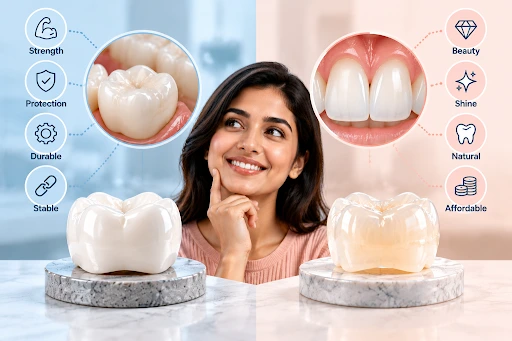
Choosing between zirconia and ceramic crowns is not only about appearance or strength. A proper crown material comparison depends on where the crown is needed, the tooth's condition, and the patient's expectations.
A dentist may consider factors such as:
- Tooth location: Back teeth experience stronger chewing pressure, making zirconia a suitable option in many cases. Front teeth may benefit from ceramic crowns because of their excellent aesthetic properties.
- Bite strength: Patients who grind their teeth or have a strong bite may require a stronger crown material.
- Aesthetic priority: If matching the natural shade and translucency of front teeth is the main goal, ceramic crowns may be preferred.
- Budget considerations: Overall crown cost varies depending on material, laboratory quality, and treatment complexity.
The best crown balances strength, appearance, and long-term oral health rather than simply choosing the most expensive option.
How Long Do Zirconia and Ceramic Crowns Last?
The longevity of both zirconia and ceramic crowns depends on several factors, including oral hygiene, bite pressure, tooth condition, and regular dental check-ups.
With proper care, dental crowns can often last many years. Research suggests zirconia crowns perform well long-term because of their high fracture resistance. Ceramic crowns can also deliver lasting results, especially in suitable cases with proper planning.
Factors that can improve crown lifespan include:
- Brushing and flossing regularly
- Avoiding habits like chewing hard objects
- Managing teeth grinding if present
- Maintaining routine dental visits
- Following proper care instructions after crown placement
While zirconia may offer an advantage in strength, the skill involved in planning and placing the crown also plays a major role in achieving successful results.
Making the Right Choice for Your Smile
Both zirconia and ceramic crowns can restore damaged teeth and improve smile appearance. The choice depends on your dental condition, aesthetic goals and functional needs.
If you’re looking for a consultation about zirconia crowns in Kolkata, a detailed dental evaluation at Smile & Profile can help determine whether zirconia, ceramic, or another crown option is the right solution for a healthy, natural-looking smile.
What People Also Ask
Are zirconia crowns stronger than ceramic crowns?
Yes, zirconia crowns are generally stronger and more resistant to fractures compared with many traditional ceramic crowns. This makes them suitable for teeth that experience higher chewing pressure, such as molars.
Which crown type looks more natural — zirconia or ceramic?
Both can provide natural results. Ceramic crowns often have excellent translucency, making them popular for front teeth. Modern zirconia crowns also offer improved aesthetics along with greater strength.
Are zirconia crowns more expensive than ceramic crowns?
In many cases, zirconia crowns may cost more because of their advanced material properties and manufacturing process. However, the final dental crown cost depends on the crown type, dentist, and treatment requirements.
How long do zirconia and ceramic crowns typically last?
With proper care, both zirconia and ceramic crowns can last many years. Their lifespan depends on factors like oral hygiene, bite pressure, tooth condition and regular dental maintenance.
Can zirconia or ceramic crowns be used for front teeth?
Yes, both can be used for front teeth. Ceramic crowns are often chosen for their aesthetic qualities, while zirconia may be selected when additional strength is required along with a natural appearance.