

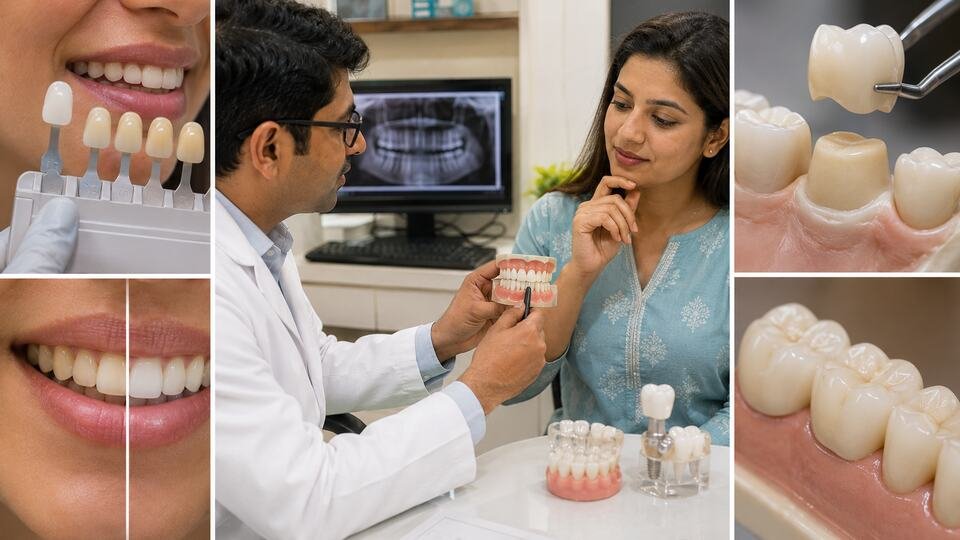
A brighter or more even smile does not always require the same treatment. Some people mainly want to reduce staining, while others may have chipped, uneven, worn or weakened teeth. That is why you need to know that veneers vs crowns vs teeth whitening depends on what needs correcting.
These cosmetic dental treatment options work differently. Whitening changes tooth colour, veneers reshape the visible surface, while crowns restore and protect more extensively damaged teeth. While considering smile design, understanding these differences is an important first step. But you don’t need to go anywhere; in this blog, we cover teeth whitening, veneers, and dental crowns, explaining what each treatment can correct and where its limitations lie. So stay tuned till the end!
What's the Real Difference Between Veneers, Crowns and Teeth Whitening?
The simplest way to compare them is to start with your goal. Whether you want to change colour, appearance, or tooth structure.
- Teeth whitening lightens the natural colour of teeth without changing their shape.
- Porcelain veneers are thin shells bonded to the front surface of teeth. They can improve colour, shape, minor gaps and certain cosmetic irregularities.
- A dental crown covers the entire visible part of a tooth. It can improve appearance while also restoring strength to a tooth that is badly damaged, heavily filled or weakened.
The American Dental Association (ADA) notes that veneers cover only the front of a tooth, whereas crowns cover the tooth more completely. So, professional teeth whitening and a veneer or crown can both improve a smile, but they solve very different dental problems.
When Should You Choose Teeth Whitening Over Other Options?
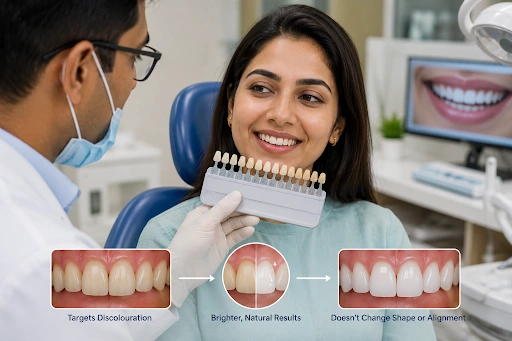
Whitening usually makes the most sense when your teeth are healthy, and their size, position, and shape are already okay, but their colour has become dull or stained.
Professional whitening uses bleaching agents to lighten natural tooth structure. According to the NHS, dentist-supervised whitening is the safest way to whiten teeth because the dentist can assess your mouth and protect your teeth and gums during treatment.
It can help when staining is related to factors such as food, drinks, smoking, or ageing. However, you should identify the cause of discolouration first. A dark tooth following injury, for example, may need a different tooth discolouration treatment.
Best For: Mild to Moderate Staining
Whitening may be considered when:
- teeth are generally healthy and well-shaped;
- yellowing or staining affects several natural teeth;
- there are no major chips or structural defects;
- the main aim is a brighter smile rather than reshaping teeth.
It is also less extensive than veneers or crowns because no tooth structure needs to be covered with a restoration.
Limitations of Whitening Treatments
Whitening cannot correct crooked teeth, gaps, worn edges or significant chips. It also does not whiten crowns, veneers or tooth-coloured fillings. The ADA specifically advises that bleaching affects natural teeth but does not change the colour of existing restorations. This matters when planning whitening for someone who already has visible dental restorations.
When Do Veneers Make More Sense Than Crowns?
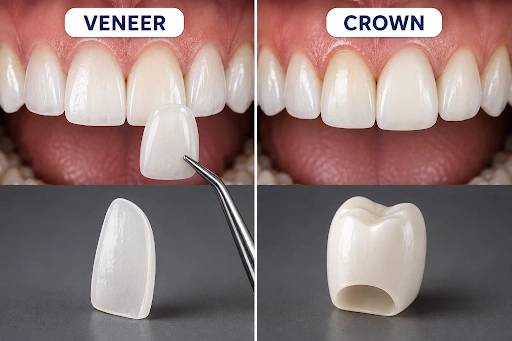
Veneers are generally considered when the tooth is reasonably healthy, but its front appearance needs changing. They may help improve:
- chipped or mildly worn front teeth;
- stubborn discolouration that does not respond well to whitening;
- small gaps;
- irregularly shaped teeth;
- selected cases of mild crookedness or unevenness.
Significant misalignment may require orthodontic treatment.
When it comes to cost, porcelain costs more upfront than composite, but your final decision should consider your overall tooth condition, material longevity, the number of teeth involved, and your desired aesthetic result.
When Is a Dental Crown the Better Choice?
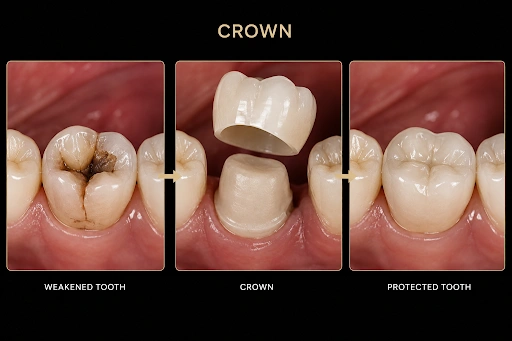
A crown becomes more relevant when a tooth needs strength and protection as well as cosmetic improvement. A dentist may therefore recommend a crown for:
- a significantly fractured or worn tooth;
- extensive decay or a very large filling;
- a tooth weakened after certain restorative treatments;
- severe loss of natural tooth structure;
- situations that need more complete coverage.
When considering a dental crown vs a veneer, the tooth's condition matters more than which option looks more cosmetic. A crown covers more of the tooth and is generally used when it needs additional structural restoration. A veneer mainly covers the front.
Veneers vs Crowns vs Teeth Whitening: A Quick Comparison
| Factor | Teeth Whitening | Veneers | Crowns |
| Main purpose | Lighten natural teeth | Improve front appearance | Restore and protect a damaged tooth |
| Changes tooth colour | Yes | Yes, by covering it | Yes, by covering it |
| Changes shape | No | Yes | Yes |
| Covers tooth | No | Mainly front surface | Most/all visible tooth structure |
| Tooth preparation | Usually none | Usually some enamel removal | More preparation generally required |
| Useful for damaged teeth | No | Selected minor defects | Yes |
| Can whiten restorations | No (Bleaching only works on natural enamel) | No (Porcelain/composite shade is locked in) | No (Porcelain/composite shade is locked in |
According to a study, over 10 years, porcelain veneers have a 4% to 5% chipping rate, whereas dental crowns have less than a 1% chipping rate over the same timeframe. That said, when comparing veneers vs crowns, durability, material, bite, oral hygiene, tooth preparation, and habits such as grinding all matter.
How Do You Decide Which One Is Right for You?
Always decide based on your teeth condition and not to replicate someone else’s smile. During a smile makeover procedure, a dentist may assess:
- tooth and gum health;
- the reason for discolouration;
- enamel and remaining tooth structure;
- chips, cracks or previous restorations;
- bite and tooth grinding;
- tooth alignment and spacing;
- facial proportions and smile line;
- the desired shade and overall appearance.
For example, whitening may be enough for healthy but stained teeth. Consider veneers when colour and shape need correction. A structurally weakened tooth may need a crown instead.
The goal should be natural-looking smile correction based on your needs.
Can You Combine Veneers, Crowns and Whitening for a Full Smile Makeover?
Yes. A smile makeover procedure may involve more than one treatment because different teeth can have different needs.
The sequence is important. Whitening is commonly planned before selecting the final shade of veneers or crowns, because bleaching changes natural teeth but cannot later lighten ceramic restorations.
For example, a treatment plan may involve:
- improving gum and tooth health first;
- whitening suitable natural teeth;
- correcting selected cosmetic defects with veneers;
- restoring weakened teeth with crowns;
- matching the restorations to the planned final shade.
This layered approach is one reason cosmetic dentistry consultations should focus on the whole smile rather than simply choosing one procedure from a menu.
Why Does the Right Diagnosis Matter More Than the Treatment Itself?
A treatment can look impressive online and still be unsuitable for a particular tooth.
Before cosmetic work begins, the dentist should check for:
- decay,
- gum disease,
- weakened enamel,
- bite problems and other conditions that could affect treatment.
This is especially important when comparing veneer vs crown durability. Longevity depends not only on the restoration itself but also on the supporting tooth, bite forces and ongoing dental care.
The right approach to cosmetic dentistry should therefore begin with diagnosis and treatment planning. The goal isn't to choose what’s trending, but to preserve healthy tooth structure wherever possible while achieving a balanced result.
Final Thoughts — Choose What's Right for Your Smile
All three can all improve a smile, but they are designed for different problems. The best choice balances appearance with long-term dental health.
So, are you considering smile design in Kolkata? We offer whitening, veneers, ceramic crowns and comprehensive smile design solutions across our Kolkata clinics.
Contact us to learn which treatment—or combination of treatments—is right for your smile.
What People Also Ask
1. Is teeth whitening permanent, or will my teeth stain again over time?
No. Whitening is not permanent. Tea, coffee, tobacco, coloured foods and natural ageing can gradually affect tooth colour again. Maintenance and dentist-advised touch-ups may help preserve the result.
2. Do veneers damage your natural teeth underneath?
Properly planned veneers do not automatically damage teeth, but conventional ones generally require some enamel removal and are therefore usually irreversible. Good oral hygiene still matters because decay can occur around or beneath restorations.
3. Which option is more affordable in the long run — veneers, crowns, or whitening?
Whitening usually involves less initial treatment, while veneers and crowns involve custom restorations. Long-term cost depends on the number of teeth, material, maintenance and whether future repair or replacement is needed.
4. Can I get all three treatments done together in one smile makeover?
They can be included in the same overall treatment plan when clinically appropriate. However, they are usually performed in a carefully planned sequence rather than all at once.
5. How painful is the procedure for veneers or crowns compared to whitening?
Whitening generally does not require tooth preparation but may cause temporary sensitivity. Veneer and crown preparation is usually done with local anaesthesia when needed, although temporary sensitivity can occur afterwards.