


Thinking about impacted wisdom tooth removal can raise two common concerns: will the procedure hurt, and how long will recovery take? An impacted last molar may cause discomfort even before treatment, but modern dental techniques help make its removal more manageable.
A wisdom tooth extraction may be straightforward or require minor surgery, depending on how deeply the tooth is trapped beneath the gum. Known medically as a third molar, this tooth often lacks enough space to emerge properly. We believe understanding the procedure and what to expect afterwards helps patients feel more prepared.
Why Do Some Last Molars Get Stuck Under the Gum?
Wisdom teeth are the last permanent teeth to emerge, usually during the late teens or early twenties. However, the jaw may not have enough room for them to grow into the correct position.
When a tooth remains partly or completely trapped beneath the gum, it is called an impacted wisdom tooth. It may grow sideways, tilt towards the neighbouring molar or remain enclosed within the jawbone.
In such cases, third molar removal may be recommended if the tooth causes pain, decay, gum disease or damage to the neighbouring tooth.
However, not every impacted tooth needs to be removed. The decision depends on the tooth's condition, potential risks and clinical findings. Healthy teeth without symptoms or disease may sometimes be monitored instead.
Signs Your Back Tooth Needs Attention
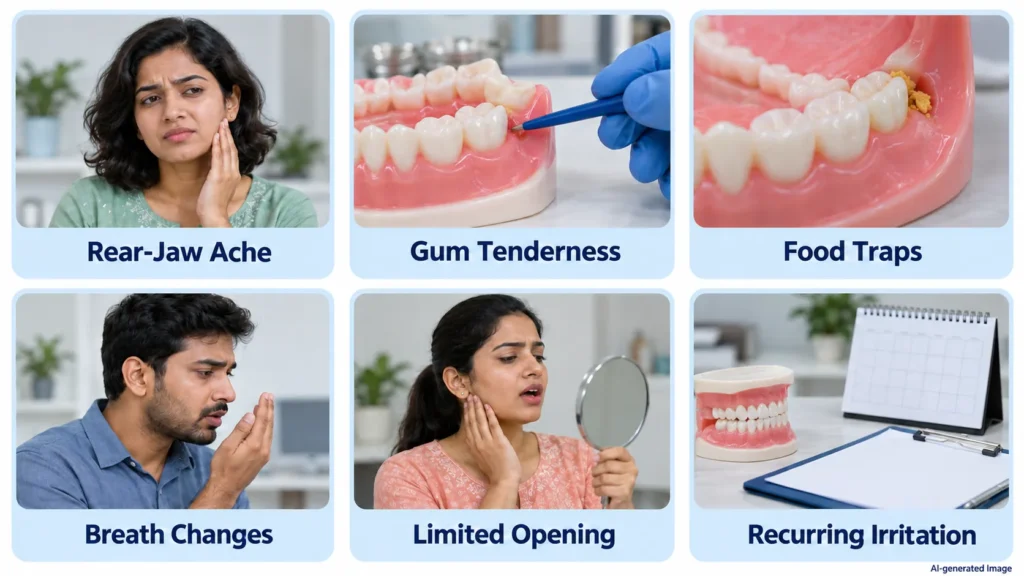
An impacted wisdom tooth does not always cause noticeable problems. When symptoms do develop, however, don't ignore them.
Common impacted wisdom tooth symptoms include:
- Pain or tenderness at the back of the mouth
- Swollen or sensitive gums around the last molar
- Food getting trapped behind the tooth
- Bad breath or an unpleasant taste
- Difficulty opening the mouth fully
- Repeated gum inflammation around a partially erupted tooth
If symptoms recur, a dentist can use an examination and X-rays to check for decay, gum problems or damage to nearby teeth.
Will You Feel Pain During the Procedure?
Fear of wisdom tooth removal pain often makes people delay treatment. However, anaesthesia helps keep the procedure comfortable.
Local anaesthesia numbs the area, so you should not feel sharp pain, although you may notice some pressure, movement, or vibration. Sedation may also be considered for anxious patients or complex procedures, depending on their health, anxiety level and treatment needs.
Once the anaesthesia wears off, some soreness, swelling and jaw stiffness are normal. The dentist may recommend suitable pain relief and aftercare instructions.
Discomfort varies with individual sensitivity and the complexity of the extraction. A deeply impacted tooth may require more extensive treatment than one that has partly emerged.
What Happens Step by Step on the Day?
A surgical wisdom tooth extraction begins with an examination to understand the tooth's position and the surrounding structures.
The process generally follows these steps:
- Dental assessment: The dentist reviews the patient's symptoms, medical history and dental condition.
- Imaging: X-rays help show the tooth's position and roots. CBCT or 3D imaging may be advised in selected complex cases, particularly when the relationship with nearby nerves needs closer assessment.
- Anaesthesia: Local anaesthesia is given to numb the treatment area. Sedation may be considered if needed.
- Accessing the tooth: If the tooth is trapped beneath the gum, a small incision may be required.
- Removing the tooth: The dentist may remove it in one piece or divide it into smaller sections when this makes removal safer or easier.
- Closing the area: The socket is cleaned, stitches are placed if needed, and gauze may be used to help control bleeding.
Most patients can return home on the same day. The dentist will explain how to manage the wound and when to return for a review, if required.
How Long Does Healing Take? A Day-by-Day Timeline
Wisdom tooth removal recovery time depends on how deeply the tooth was impacted, the procedure's complexity, and the body's healing response.

The First Two Days
During the first 24–48 hours, the body begins forming a blood clot in the empty socket. This clot protects the area and supports healing.
Swelling after wisdom tooth removal is common and may become more noticeable during the first two or three days.
During this period:
- Apply a cold pack to the outside of the cheek, following the dentist's instructions.
- Choose soft, cool or lukewarm foods.
- Rest and avoid strenuous exercise.
- Avoid disturbing the socket or rinsing forcefully during the first 24 hours.
Days Three to Seven
Swelling and discomfort should gradually ease, making eating and jaw movement easier. Continue brushing carefully and, after the first 24 hours, gently rinse with warm salt water as advised by your dentist. Seek dental advice if pain or swelling worsens instead of improving.
Week Two and Beyond
Most symptoms should improve by the second week, although deeper tissues may take longer to heal. Dissolvable stitches usually disappear on their own. Consult your dentist if pain, swelling or difficulty opening your mouth persists or worsens.
Simple Habits for Faster Healing
Good wisdom tooth removal aftercare helps protect the blood clot, reduce irritation and support recovery.
Foods to choose:
- Yoghurt and soft cheese
- Mashed potatoes
- Scrambled eggs
- Soft, well-cooked pasta
- Smooth soups served at a comfortable temperature
Avoid hard, crunchy or seedy foods that may irritate the socket or become trapped in it. Gradually return to your usual diet as comfort improves.
Habits to avoid:
- Smoking or vaping, which can interfere with healing
- Drinking through a straw or creating strong suction
- Vigorous rinsing, spitting or touching the socket
- Alcohol and very hot drinks during the early recovery period
- Skipping prescribed medicines or changing their dosage without advice
Follow the dentist's instructions carefully, as recommendations may differ depending on the procedure.
Warning Signs You Should Never Ignore
Although complications are uncommon, recognising warning signs early is important. Dry socket occurs when the protective blood clot is lost or fails to remain in place, exposing the underlying bone.
Contact your dentist if you notice:
- Severe or worsening pain, especially after initial improvement
- Persistent unpleasant taste or smell
- Swelling that increases after the first few days
- Fever, pus or feeling generally unwell
- Bleeding that does not stop with recommended measures
Seek urgent medical help if you have difficulty breathing or swallowing. Contact your dentist promptly for persistent bleeding, worsening pain or signs of infection.
Which Clinic is the Right Fit for Your Treatment?
Choosing a clinic involves more than comparing the quoted price. Before recommending treatment, the dentist should examine the tooth’s position, how difficult the extraction is likely to be, the location of nearby nerves and the patient’s medical history.
When comparing wisdom tooth removal cost in Kolkata, consider factors such as:
- Whether the tooth is partly or fully impacted
- Whether additional imaging is needed
- How complex the procedure is
- The type of anaesthesia or sedation required
- Follow-up care and post-operative guidance
We examine the tooth, then explain the procedure, anaesthesia options and recovery. We also guide you on aftercare, so you can decide with confidence.
Take the First Step Towards Healing Comfortably
An impacted last molar doesn't always need removal, but recurring pain, decay, or other dental problems deserve a proper assessment. With the right treatment plan and aftercare, recovery can be easier to manage.
For personalised advice on wisdom tooth removal in Kolkata, book a consultation to understand your treatment options and prepare for recovery.
What People Also Ask
How long does the swelling last after the procedure?
Swelling is often most noticeable during the first two or three days and should then begin to settle. Some residual swelling may last up to two weeks. Worsening swelling needs prompt dental assessment.
Can someone go to work the very next day?
Many people can return to routine activities the following day after a straightforward extraction. More complex surgery or sedation may require additional rest, so follow the dentist's advice.
What should someone eat while the area heals?
Soft foods such as yoghurt, mashed potatoes, scrambled eggs and lukewarm soup are suitable choices. Avoid hard, crunchy or seedy foods until chewing becomes comfortable.
How can someone tell if the socket is not healing properly?
Increasing pain after initial improvement, a persistent unpleasant taste, worsening swelling, fever or pus may indicate a complication. Contact the dentist for an assessment.
Should a painless back tooth be removed anyway?
Not necessarily. A symptom-free wisdom tooth may be monitored if it is healthy and not causing problems. Removal may be recommended if an examination reveals disease, damage or a significant risk of complications.